An open workflow built on evidence
The Pirate Ray is Makerspace Næstved's clean-room effort toward an open-source desktop workflow for laser equipment. Its intended scope includes geometry editing or import, operation assignment, parameter handling, preview and validation, followed eventually by independently auditable machine backends.
The current repository is a research and development project, not a finished laser-control product. Its public documentation deliberately separates evidence collection, offline implementation and any later interaction with physical equipment.
Reuse where it can be audited
The accepted architecture builds around Rayforge's desktop workflow and a JCZ addon, with MeerK40t's BalorMK implementation retained as a pinned behavioral reference. The goal is to reuse existing open-source capabilities where they satisfy documented requirements rather than recreate an entire desktop application from scratch.
The work examines how geometry, layers, material recipes, device profiles and MOPA-related parameters cross those boundaries. Original code and documentation use the MIT license; referenced and bundled upstream components keep their own licensing obligations.
What has been established
- A documented Phase 0 evidence baseline and sanitized public research.
- Offline reuse proofs covering mock encoding, profile and parameter gates, buffering, cancellation and recovery.
- A transport-free workflow preview and non-executing package verification.
- A hardware-research protocol whose review state does not itself authorize controller access.
Current limits are part of the design
At the time of review, the README explicitly states that the project has not opened a USB endpoint or issued controller commands, motion or laser output. A packaged no-device workflow interaction test remains an outstanding acceptance step.
The next documented steps focus on the acceptance kit, packaged offline interaction, evidence-backed imports and independent protocol review. Unknown fields are not guessed or replayed, and passing software checks is not presented as certification of hardware safety.
Public research, carefully bounded
The public repository contains source, plans, decisions, tests, tools and sanitized research. This description intentionally stays at that public architectural level and does not reproduce raw machine data, identifiers, private exports or operational parameter recipes.
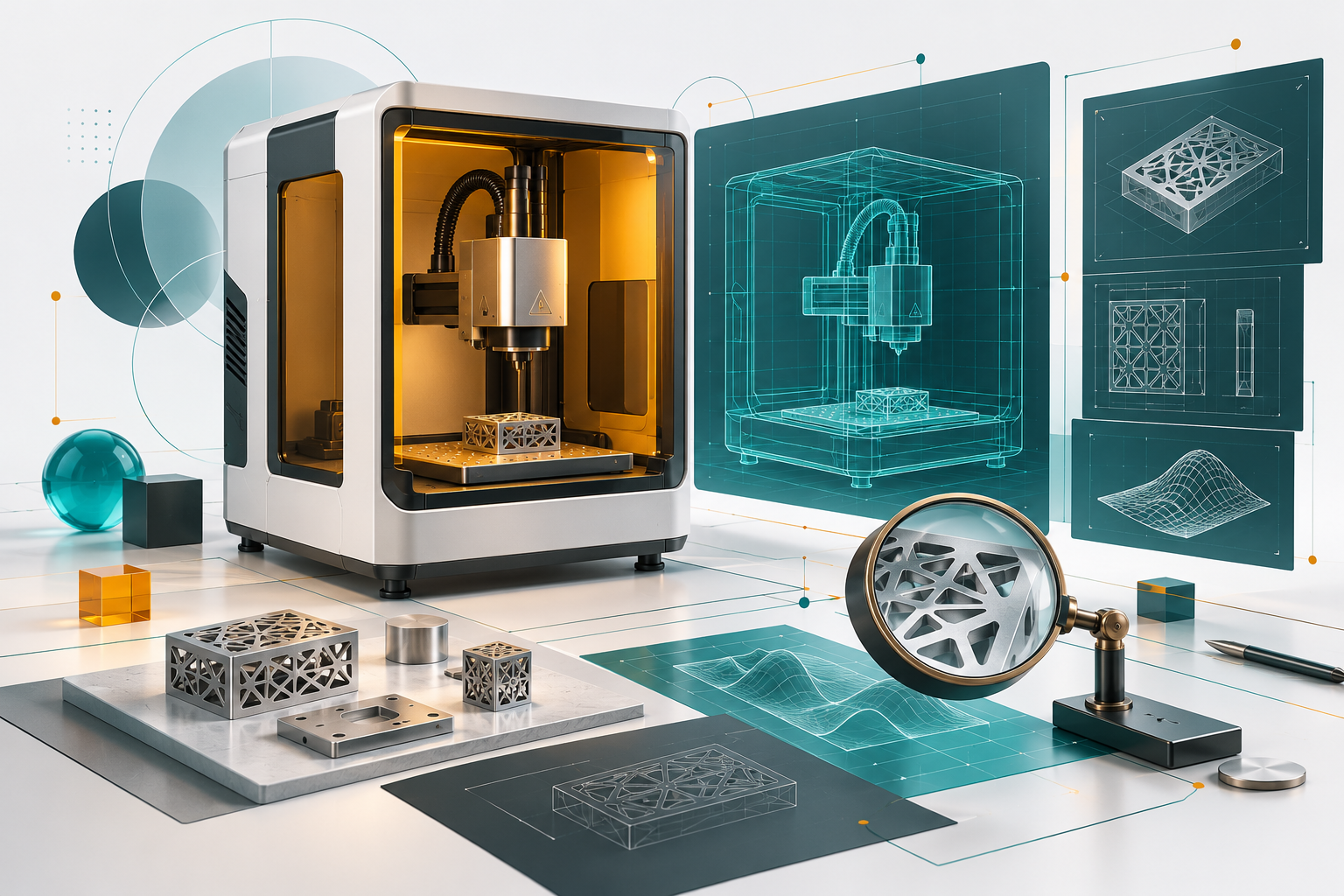
The project is particularly interesting as an example of provenance, staged validation and explicit boundaries in maker software. Its featured illustration is an imagined research workbench, not a photograph of the actual equipment or a claim of working machine control.
Explore the repository
Read the source code and project documentation for the latest implementation details and setup instructions. This description is based on the public repository reviewed on October 29, 2026.